
Miscarriage & Pregnancy Loss
I've been exactly where you are.
Everyone else moved on. You never got to.
I lost my baby at 17 weeks. The hardest part wasn't the day it happened. It was the weeks after, when the world went back to normal and I was quietly expected to go with it.
You're not behind. You're not doing grief wrong. And you don't have to keep doing it on your own.
Free guide · $17 USD Calm After Loss Toolkit · Heal and Be Held opening soon
Three ways in
Start wherever you actually are today.
Not where you think you should be. Some days you can only manage something free that you read in five minutes. Some days you want something in your hands for the hard nights. And some days what you actually need is other women who get it, and me, every single month.
Start here
5 Steps To Start Healing After Pregnancy Loss
Free guide
The five things I wish someone had handed me in the first weeks. Short, honest, and readable on a bad day. No stages. No timeline.
Most women start here
The Calm After Loss Toolkit
$17 USD
Audios, practices and prompts for the actual hard moments: the sleepless nights, the mornings you can't face, the trigger you didn't see coming, and the anger you're not allowed to say out loud.
Opening soon
Heal and Be Held
Opening soon
Live monthly calls with me, a private space with women who don't need you to explain, and the full toolkit and library included. I'm building it now. Put your name down and you'll hear first, before it goes anywhere public.

Lived, not learned
I'm not going to tell you about the five stages of grief.
I lost my baby at 17 weeks. We called her Bubbalub.
And it wrecked me for months.
Not in the way people expect. I functioned. I answered messages. I said "I'm doing okay" so many times that I almost believed it. On the outside I looked like a woman handling something hard extremely well.
Underneath, I was somewhere else entirely.
I'd be fine all day and then flattened at nine at night for no reason I could name. I'd hear a pregnancy announcement and feel genuinely happy and completely gutted in the same breath, and then feel like a terrible person for the second part. My body kept behaving like it was still pregnant, and nobody had warned me about that. My due date came and I was the only person in the world who knew what day it was.
The strongest thing I did wasn't holding it together. It was finally letting it be as hard as it actually was.
Here's the thing nobody says out loud.
Most of the pain in the months after a loss isn't only the loss. It's the pressure to be okay about it faster than you actually are. It's a nervous system stuck on high alert with nowhere to put it. It's grieving something the rest of the world never got to meet, so they genuinely don't understand why you're not back yet.
You don't need someone to talk you out of your grief.
You need somewhere it's allowed to be as big as it is, and something practical to hold onto at 2am.
Here's the part I want you to hear, though.
I had done a lot of work on myself before I lost her. I genuinely thought I had the tools for this. I didn't. Sadness, confusion, guilt, shame, anger, all of it on a loop I could not think my way out of, and I felt like a fraud for being stuck in it.
What actually turned it was admitting out loud that I couldn't do it on my own. Then doing the real work: the nervous system, the emotions my body was still holding, the beliefs sitting underneath it all.
When I got pregnant with my son Oakley, I wasn't paralysed. I was present. I could actually be in it.
And I want to be careful here, because I'm not promising you a baby. That isn't mine to promise and I'd never dangle it. What I'm telling you is that the thing that changed was me, not my luck. The fear stopped running the show. That part is available to you whatever happens next.
That's what everything on this page is for.
So you know who you're listening to
I'm a Master NLP Practitioner, Master Coach, Master Hypnosis Practitioner and Emotional Change Technique Master Practitioner, with over seven years of coaching behind me. I'm also a Quantum Healing Practitioner, though that's not what most women come to me for.
What I am not is a therapist or a counsellor, and I'll never pretend otherwise. I'm someone who does this work for a living and who has been exactly where you are.
If any of this is you
You're not being dramatic. You're being human.
- You've said "I'm fine" so many times this week that you've stopped hearing yourself say it.
- You were okay all day and then something small took your legs out at nine at night.
- Someone announced a pregnancy and you were happy for them and completely gutted, in the same breath.
- Your partner seems to be coping, and you don't know whether you're relieved or quietly furious.
- You went back to work in a week and everyone keeps saying how well you're doing.
- Your due date is coming and you're the only person alive who knows what day it is.
- You've started scanning every room for prams and bumps before you've even decided to.
- You're terrified to try again and you're desperate to try again, and both are true right now.
- People have started asking about other things. Like it's finished. It isn't finished.
None of that means something is wrong with you. It means you loved something, and your body and your mind are still catching up to what happened.

You will not always feel the way you feel tonight. I'm not going to tell you when, because I don't know and I won't insult you with a timeline. But it's true, and I've stood where you're standing

Free guide
5 Steps To Start Healing After Pregnancy Loss
The five things I wish someone had put in my hands in the first weeks, instead of a pamphlet and a follow up appointment. You can read it on a bad day. It asks nothing of you.
What's in it
- Acknowledging the loss. Why pretending you're fine is the thing keeping you stuck in it.
- Getting support. Where to find the kind that actually helps, and how to spot the kind that doesn't.
- Looking after yourself. Practical, small, and possible on the days everything feels heavy.
- Meaning and growth. How to honour your loss without being defined by it.
- Moving forward. What healing actually looks like, which is nothing like what you've been told.
9 pages. Written to be readable on a bad day.
It lands in your inbox straight away. Unsubscribe any time, no hard feelings.
$17 USD
The Calm After Loss Toolkit
Grief doesn't arrive on a schedule. It arrives at 2am. In the car park. Halfway through a work call. On the one day you thought you were finally doing better.
This is what you reach for in those moments. Not a course you have to complete. Not homework. A set of things you can use in ten minutes, in bed, with the lights off, on the worst night of the week.
What it actually does for you:
- Sleep, instead of lying there running it back for the hundredth time.
- Something to do with your body when a wave hits and you're not somewhere you can fall apart.
- Feel the thing all the way through without it swallowing the entire day.
- Get through the ambushes: a pregnancy announcement, your due date, Mother's Day.
- Be steady on the days it all feels like it's coming apart at once.
Evening Nervous System Downshift & Sleep Audio
The nights are the worst part and nobody tells you that. This one brings your body down out of high alert so sleep is actually possible. Use it: lying in bed, when your brain won't stop replaying it.
Morning Grounding Practice
For the mornings where the first thing you feel, before you're even properly awake, is the weight of remembering. Use it: before you get out of bed and start performing okay.
Golden Light Visualisation
A gentle guided visualisation for the days you need something to hold onto and words aren't doing it. Use it: due dates, anniversaries, and the days that have a shape you can't explain.
Triggers & Soothing Alternatives Worksheet
Naming what actually sets you off, so it stops ambushing you, and having something ready that isn't just white knuckling it. Use it: once, properly. Then keep it where you can find it fast.
Your Personal Soothing Toolkit & Vow
Your own list, built by you, for the moments you can't think straight enough to work out what would help. Plus the vow, which is the part women tell me they didn't expect to need. Use it: when you've got nothing left and no idea what you need.
Daily Journal Prompts
Short, specific prompts. Not "how are you feeling today", which is a useless question when the answer is everything and nothing. Use it: five minutes a day, or whenever you can manage it.
Nervous System Map
So you can finally see what's happening to you instead of assuming you're losing it. The fine-then-flattened thing has a mechanism, and understanding it takes some of the fear out. Use it: the first day. It reframes everything else in here.
The Anger Hypnosis
The part almost nobody gives you permission for. Anger at your body, at the timing, at the people who said the wrong thing, at the ones who got to keep theirs. It's allowed. This gives it somewhere to go. Use it: when you're furious and ashamed of being furious.
USD · Instant access · Yours to keep
Get the Calm After Loss Toolkit7 day money back guarantee. Use all of it. If it doesn't help, email me inside 7 days and I'll refund you, and you won't have to explain why.
Priced so it isn't a decision you have to think about on a day you can't think. If $17 USD is genuinely out of reach right now, message me on Instagram and I'll send it to you.
Women I've walked beside
In their words, not mine.
These are women who came to me after their own losses. I've left what they said exactly as they said it.
I gained a new sense of healing and awareness after working with Fleur around my pregnancy losses. Previously, I had worked through many layers and some things were still left stuffed away, and through her coaching, I felt so seen and heard to visit those pieces and heal them. I gained a lot of peace and clarity around my losses.
Jen
While Fleur has said "there is no moving forward, just integrating it into your life," she has created support that helps you process and understand your emotions. She gives you strategies to use and ideas to integrate into your daily life. When I go to her with my thoughts, she always has something to say that is helpful.
Erin
I'm only four weeks into my coaching with Fleur and it's already surpassed my expectations. I was open to trying something new and desperately needed the support to move forwards in my life, but I did not anticipate how much my mindset would have changed and how much I would have overcome by this point. I feel freer already.
EmilyEmily later went on to have a healthy baby girl.
A note on Emily, because it matters: I'm including that last line because it's true, not because I'm promising it. Plenty of the women I work with are not on that road, and the work is just as much theirs.
Opening soon
Heal and Be Held
There is a specific kind of lonely that comes after losing a baby.
It isn't that nobody cares. It's that you're carrying something the people around you never got to meet, so you end up managing their discomfort about it on top of your own grief. You start editing yourself. You stop saying the true thing because you can see it landing badly.
This is the room where you won't have to do any of that.
Every woman in it will know. Nobody will need the backstory. Nobody will flinch. And once a month, you'll get me, live, for as long as you need to stay in it.
I'm building it now, and I'm not going to pretend it's ready before it is. Put your name down and you'll be the first to know when the doors open, before it goes anywhere public.
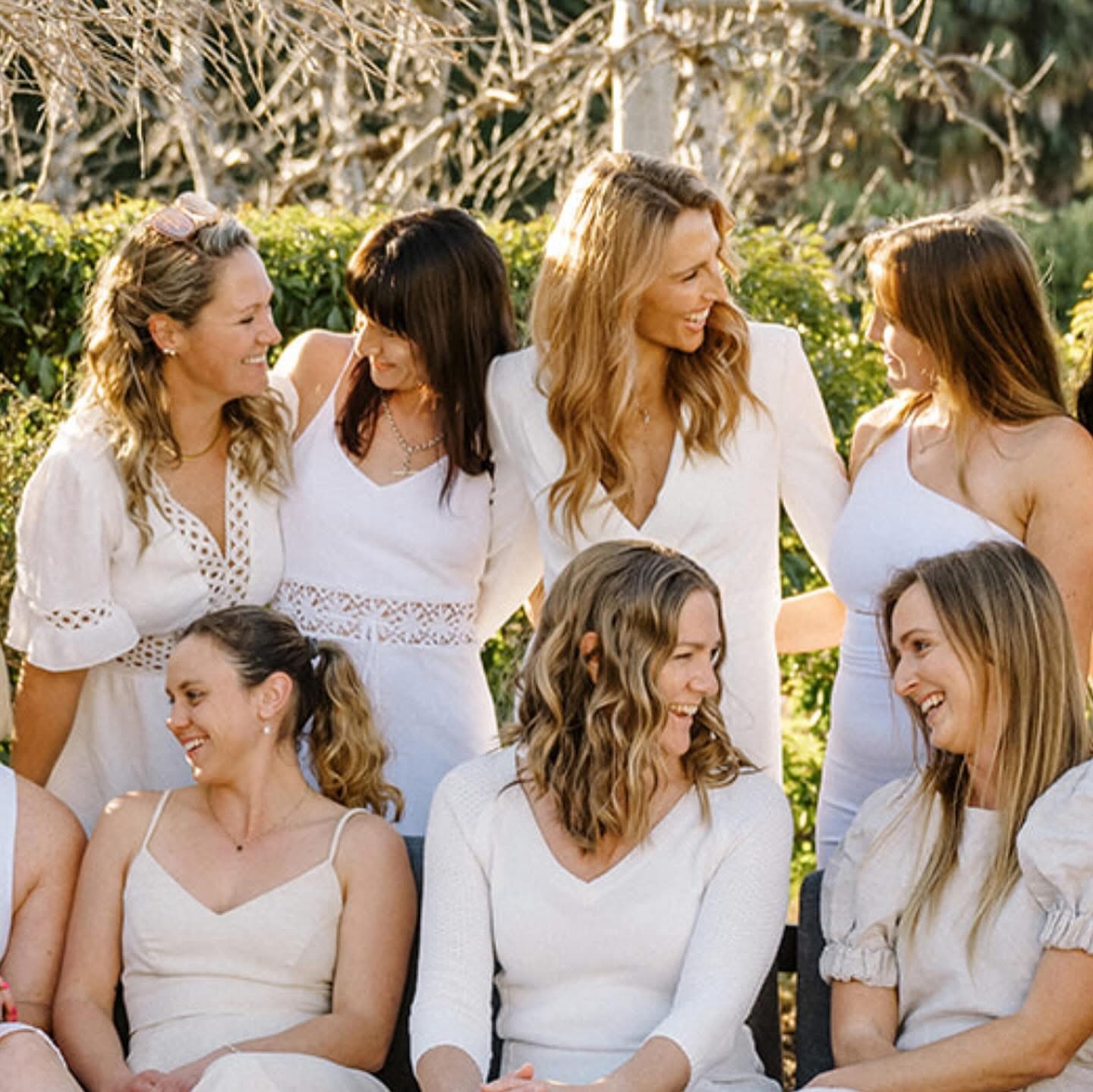
This is the bit I can't put in a PDF. Women in a room, none of whom need you to explain.
- Live monthly group calls with me Bring what's actually happening. Ask the thing you can't ask anyone else. Or come and say nothing and just be in the room with women who understand. All three are allowed.
- A private group space, always open For the 2am nights and the ordinary Tuesdays. Grief doesn't wait for the call, so neither does this. Post at any hour and someone who genuinely gets it will be there.
- The full Calm After Loss Toolkit, included Every audio, practice and prompt, from the day you join. You don't buy it separately.
- The full library, and it keeps growing Every call gets recorded and kept, and I'll keep adding to it. The due dates, the trying again, the relationship, the anger, the going back to work. If you miss a month, you haven't missed it.
A few short questions so I know who's waiting and what you're actually carrying, which is what I'm building this around. I read every one myself. No payment now and nothing to commit to. When the doors open I'll come to you first, and you can decide then.
When it opens: stay for one month, stay for a year, or come back in six months when your due date is approaching and you can feel it coming.
There'll be no minimum term, because putting a contract on someone's grief would be an appalling thing to do.
And if tonight is hard, don't wait for me to open a door.
The free guide and the $17 USD toolkit are both here right now, and the toolkit is the one built for the 2am nights.
Being straight with you
What this is, and what it definitely isn't.
This isn't therapy or counselling, and I'm not a therapist or a counsellor.
I'm a coach and mentor who has actually lived this, walking beside you rather than managing your grief from a textbook.
This isn't a programme that moves you through stages on a timeline.
There's no schedule you can fall behind on. You use what you need, on the day you need it, and that's the whole design.
This isn't about getting over it, or moving on, or finding the silver lining.
Your baby mattered. That doesn't get resolved away. What changes is how much you're carrying alone, and whether you have somewhere to put it.
This isn't me telling you to be positive, or grateful, or strong.
You've had enough of that. Being strong is what got you performing fine while you were falling apart in the car.
Questions women actually ask me
The things you might not want to ask out loud.
There's no supposed to.
The question itself is usually the problem. It comes from somewhere outside you, from a world that got uncomfortable and wanted a date by which you'd be back to normal.
It took me months, and I was doing this work for a living. You are not behind.
No. And some of the women who need this most are years out.
Grief that never had anywhere to go doesn't disappear. It goes quiet and it goes underground, and then it turns up as anxiety, or numbness, or a wall between you and your partner that neither of you can explain.
If it's still there, it's still current. It doesn't matter what the calendar says.
No, and I won't pretend otherwise.
I'm a coach, mentor and emotional change specialist who lost her baby at 17 weeks. This isn't therapy and it isn't clinical treatment.
Plenty of women do both. If you're already seeing someone, keep seeing them. This sits alongside that, it doesn't replace it.
It's exactly the right place, and pregnancy after loss is its own particular kind of hard that almost nobody prepares you for.
You're supposed to be delighted. Instead you're holding your breath between appointments and refusing to let yourself want it.
Bring it to me. It's one of the things I most want that room to hold, and you will not be the only one in there carrying it.
Never.
Camera off, name changed, sitting in the dark with the sound low. All completely fine.
You can listen for months before you say a word, and something will still shift, just from hearing another woman say the thing you thought only you were thinking.
Right now the toolkit, because the community isn't open yet.
If what you need is something practical for the nights, that's the $17 USD toolkit and you can have it in the next two minutes.
If what's hurting most is the loneliness of it, register your interest in the community as well, then take the toolkit to get you through until it opens. You won't be paying twice for it either, the toolkit is included once you're in.
And if you're not ready for any of it, take the free guide. That's genuinely a fine place to stop for now.
I'm building it now, and I'm not going to give you a date I'm not certain I can keep.
What I will do is come to the women who registered first, before it's announced anywhere else.
Registering costs you nothing and commits you to nothing. It tells me who's waiting and what you're actually carrying, which is genuinely shaping what I build. If tonight is hard, don't wait for me. The toolkit exists now and it's made for exactly that.
Any time, from inside your own account. No phone call, no exit interview, no explaining yourself to anybody.
You'd be leaving a grief community. The last thing you should have to do on the way out is justify it.
This is one of the most common things women raise with me, and one of the first things I want that room to make sayable.
He looks like he's fine and you can't work out whether he's coping better than you or not feeling it at all, and there's a resentment sitting underneath that you don't really want to say out loud.
Say it there. It's one of the most common things in the room, and it's one of the things that shifts fastest once it's out of your head.
Because grief isn't living in your thoughts. It's living in your body.
All day you're managing: working, talking, being fine. That takes effort, and the effort is what's holding it down. The second you stop, at nine at night, in the shower, in the car with the engine off, the holding stops too and it comes up all at once.
It isn't a setback and it isn't you going backwards. It's the bill for a day spent performing okay.
Yes, and it's the part almost nobody gives you permission for.
Angry at your body for not doing the one thing. Angry at the timing. Angry at whoever said "at least you know you can get pregnant." Angry at the women who got to keep theirs, and then sick with shame for feeling that.
The shame is the problem, not the anger. Anger with nowhere to go turns inward and becomes the flatness that people mistake for depression. There's a hypnosis specifically for this in the toolkit, because it comes up so consistently.
Because you're grieving someone they never met.
They can't picture your baby, so they can't miss them with you. They can see you're sad and they genuinely don't know what to do with it, which means you end up managing their discomfort on top of your own grief.
So you start editing. You stop saying the true thing because you can see it landing badly. That's the loneliness. It isn't that nobody cares, it's that you've gone quiet to protect everyone else.
"At least it was early." "Everything happens for a reason." "You can always try again."
You don't owe any of them a gracious answer. "I'm not talking about it today" is a complete sentence, and so is changing the subject without softening it first.
Most of them aren't being cruel, they're uncomfortable and reaching for something to fill the silence. Understanding that doesn't mean you have to absorb it. The free guide has a section on this, because it's one of the most exhausting parts of the first few months.
You don't have to be okay yet.
You just don't have to do the next part of it completely on your own.
The toolkit is the thing I'd put in your hands tonight. It's $17 USD, you'll have it in two minutes, and if it doesn't help you get your money back without explaining yourself. And if even that is too much today, take the free guide. That's genuinely enough.
Please read this bit. I'm a coach and mentor, not a therapist, counsellor or medical practitioner, and nothing here is medical or psychological treatment. If you're in crisis, or you're having thoughts of harming yourself, please reach out to your doctor or a crisis line in your country right now. In Australia that's Lifeline on 13 11 14. You deserve real support, immediately, and there is no shame in any of it.